Estimated reading time: 7 minutes
A memoirist reflects on seven decades of writing as spiritual practice — from a childhood journal after tragic loss to healing through cancer and reclaiming her voice
—
Since an early age, I’ve thought of writing as my spiritual practice because it’s where I feel most comfortable and happy. Writing can connect us to what seems most right for us, both personally and professionally. It can help us identify our mission and reason for being alive now by encouraging us to reflect on our feelings.
As a memoirist, I’ve written about many of my life-changing experiences, and there have been many during my seven decades on this planet. For me, writing justifies my existence. I believe it’s the reason I am here. When I look back at my life experiences and reflect on those that have truly transformed me, challenged me, or made me feel more aware or more alive, I must say that these were pivotal events involving the deaths of loved ones, the forming or evolution of relationships, becoming a parent, sexual encounters, and meaningful conversations with others. These topics have all been subjects of exploration in my writing. The process has led to some form of change or transformation.
Most writers will agree that they write because they have to write, not necessarily because they want to write. We write out of necessity because it either makes us feel better or we want to share our stories with the world.
My life as a writer began at the age of ten. I was the only child of immigrant parents who both worked and were gone all day. My maternal grandmother was my beloved caretaker who sadly, took her life on Labor Day weekend when I was alone at home with her. At least that’s what her death certificate said, because they found an empty bottle of sleeping pills on her bedside table and they assumed that because she was previously depressed that that’s what she’d done.
It was a hot day, one of those typical early fall days that feel more like summer. We lived in a suburban immigrant community with other multigenerational households, so I was excited when a friend invited me to go swimming in her pool. With a child’s enthusiasm, I knocked on my grandmother’s door to ask for permission. There was no answer. I tried several times, but still she didn’t respond. I called to her, but there was only silence. I pushed the door open and looked in the room to see my grandmother, completely still, in her bed. Trembling with fear, I phoned my parents. They came home and before I knew what was going on, my beloved grandmother was being carried down our creaky wooden stairs on a stretcher and put into an ambulance. I never saw her again.
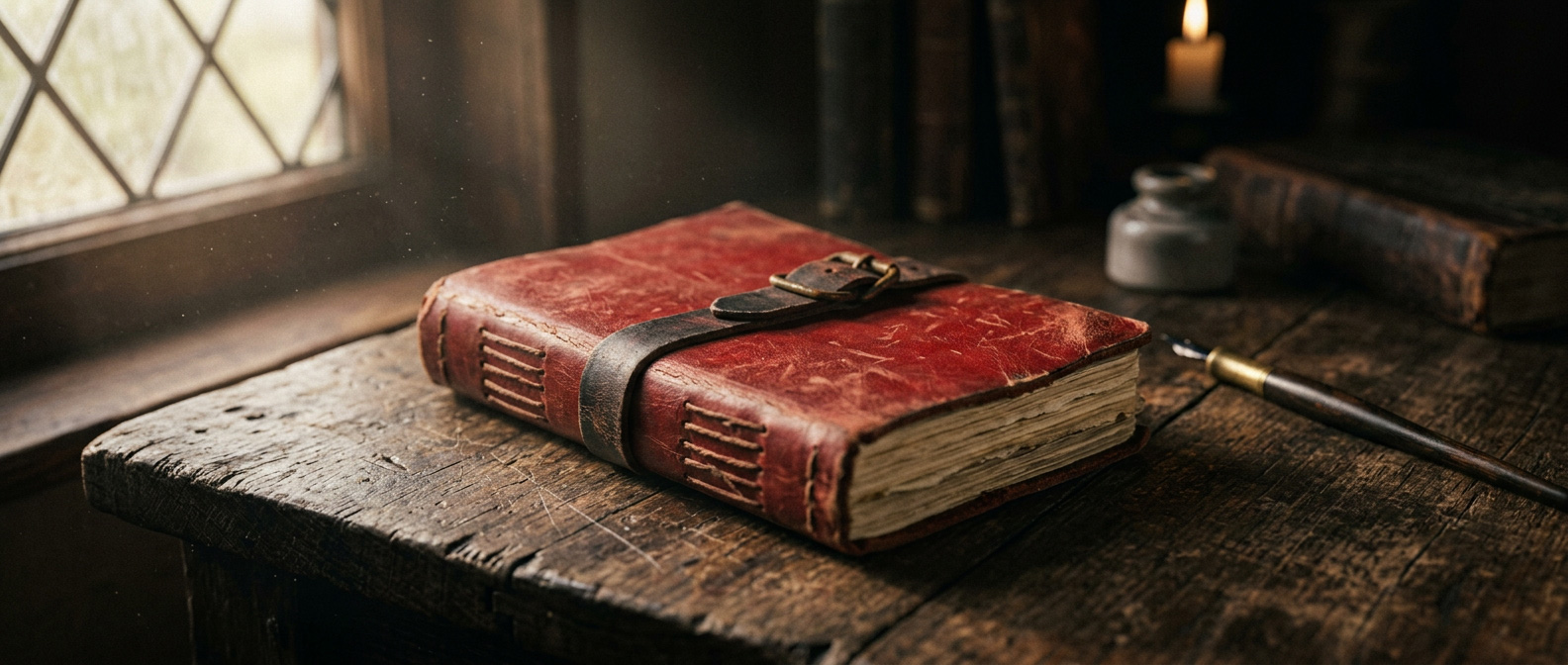
My mother knew I was grieving and wanted to help me work through the trauma of my loss. She was also an only child and having her own difficulty coping with her mother’s sudden death. It was the 1960s, and reaching out to therapists wasn’t done in those days, so she bought me a blank, red leather journal with a saying by Kahlil Gibran at the top of each page.
For months after my grandmother’s suicide, my mother continued to encourage me to write down my feelings. Having been an English major in college, she intuitively knew this was a great way for me to cope with my grief.
For me, writing began as a spiritual practice back then and continues to be a very important part of my everyday life. While raising three children, I requested some time each day, usually in the early morning or late at night when everyone was asleep, when I could be alone in my office writing. My family knew that if I was deprived of this time, I would get grumpy so they’d send me to my room. Little did I realize that my mother’s inclination to buy me a journal would set the stage for my lifelong passion for writing.
Many years later, when my mother moved from my childhood home and the house where she went to high school, and I was in my forties, she gifted me with my grandmother’s journal that she’d typed on a manual Remington typewriter. She wrote the journal retrospectively about her life as an orphan in Poland during World War I, after she emigrated to the United States. It was the greatest gift a granddaughter could ever receive, especially one who aspired to be a published writer. I devoured every word and included parts of it in a thesis for my Master of Fine Arts (MFA), which became my first published memoir, Regina’s Closet: Finding My Grandmother’s Secret Journal.
In that book, I dealt with two major turning points in my life: losing my grandmother and then discovering her sacred journal. The journal was sacred because of its role in helping me learn about and understand my grandmother’s thoughts and why she might have committed suicide at the age of sixty-one.
Studying my grandmother’s life experiences helped empower me to become a woman warrior. I realized she had been a survivor for most of her life, first being born to a mother who did not want to bring a daughter into the world and then surviving being orphaned at the age of eleven with her sister.
In continuing my path of writing as a spiritual practice, I returned to graduate school to research the healing and transformative powers of memoir writing for my doctoral degree. Basically, my research examined how life-changing experiences have inspired some esteemed authors to write the narratives of their lives. I learned that writing one’s story is a way to reclaim one’s voice, share a family secret, or simply relate a personal story to others.
Writing about one’s experiences is very liberating and satisfying, because when we release our secrets, we achieve a level of freedom that gives us more control over our lives.
Freedom comes in many forms. I am a three-time cancer survivor. When I was first diagnosed with breast cancer in 2001, I journaled my way to recovery. After telling my surgeon I was a writer, he actually encouraged me to keep a journal as a way of sharing my experiences with him. It was his way of inspiring me to heal myself through the writing process. It was also an opportunity for him to learn about what goes on in the mind of a woman with breast cancer. It was always much easier for me to write than to speak about what was going on in my heart.
One of the things I acknowledged during all my cancer experiences was the brevity of life. I realized there was no time like the present to seek bliss by writing and sharing experiences. When others read about my experiences, they report back to me that my words have helped them cope with their own. This was very gratifying to hear. At the time of that first cancer diagnosis, I also acknowledged that having toxic people in my life was a creativity deterrent, so as much as possible I tried, and continue to try, to surround myself with inspiring, positive, creative, and loving individuals.
I am surely not the only writer who has used writing as a spiritual practice. Many writers, such as Anaïs Nin, have used writing in this way. In my own case, pivotal or life-changing events have served as stepping-stones for new writing projects and/or self-discovery processes—an example being my book, Writing for Bliss.
My more recent book, Hummingbird: Messages from My Ancestors, was written during the Covid-19 pandemic, and it helped me get through each day of lockdown. Not only did it keep me busy and give me a mission, but it was also a time when I connected spiritually with my grandmother who visited daily in the form of a hummingbird. Writing is a personal creative process that can bring a sense of wholeness and, ultimately, bliss. It is what I have been striving for all my life.
You may also enjoy reading Life Is Good: A Perspective on Gratitude, by Diana Raab.
