Estimated reading time: 8 minutes
When my father’s Alzheimer’s diagnosis came, so did a grief I didn’t expect. Here’s what I learned about loss, anticipatory grief, and love.
—
I was grieving.
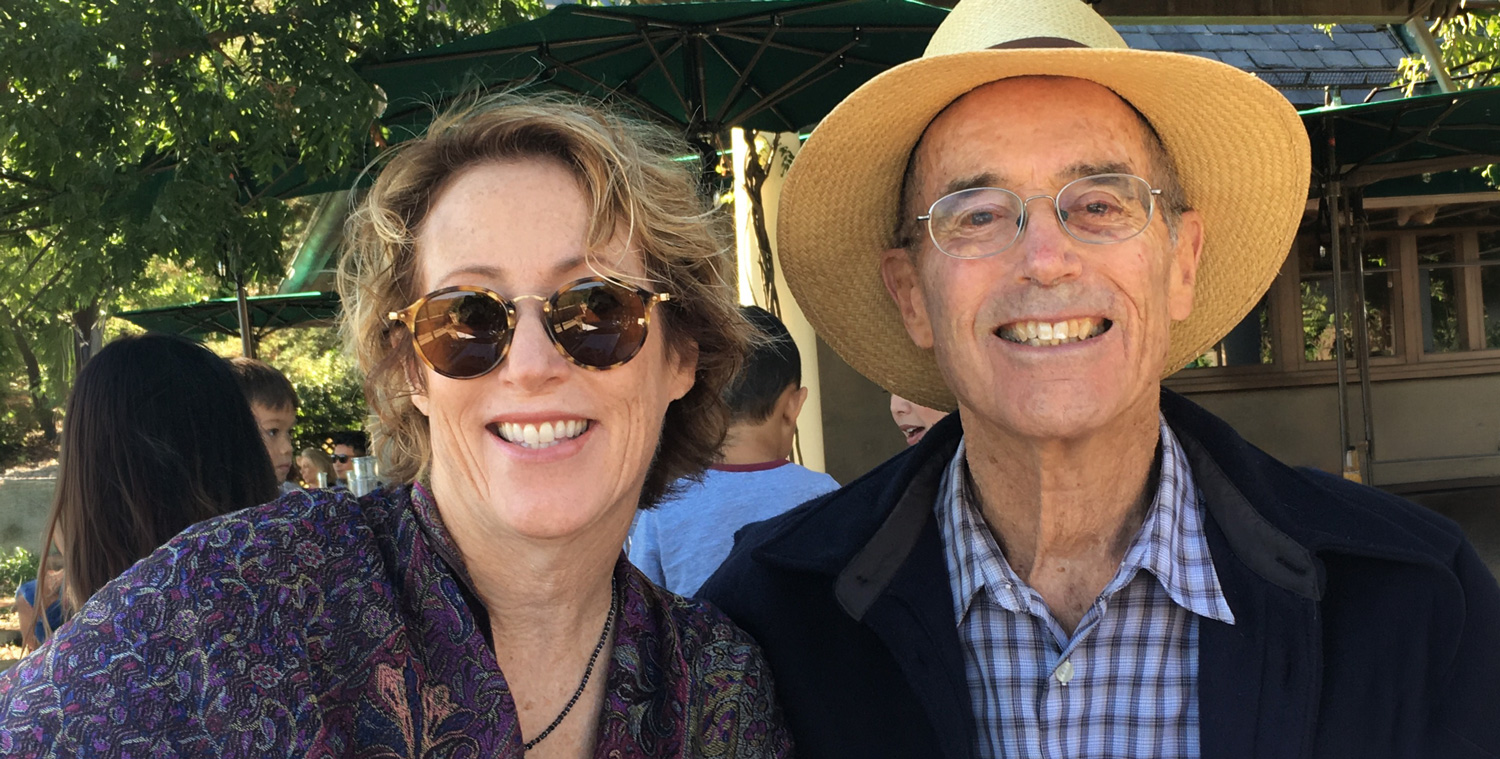
But my grief wasn’t after a loved one’s death. It was the grief of slowly losing my father to the fog of Alzheimer’s. My father was still with me physically, with his iconic closed-mouth grin and gracious demeanor. “It’s so nice to see you,” he always said. But I ached for the active, articulate man he once was.
Years ago, while attending college to study social work, I volunteered at a sociology conference—Elizabeth Kubler Ross was one of the speakers. Although I learned in detail her acclaimed Stages of Grief—denial, anger, bargaining, depression, and acceptance—my impression at the time was these stages were associated only with death. I have since learned it is possible to grieve someone who is dealing with a life-threatening illness. I also learned these stages of grief can overlap, not necessarily occurring in a predictable sequence. There is even a term for this—Anticipatory Grief.
I dragged my dad from one doctor to the next—neurologists, neuropsychologists, memory clinics—not wanting to believe his memory issues and physical decline were unfixable. I fantasized that the doctors could prescribe a pill to make all his symptoms disappear magically.
This was denial.
But I was not in complete denial. I knew there was something seriously amiss with my father—stacks of paper appeared on every tabletop and counter in his house, as well as his entire office floor. He was no longer able to keep up with his mail or bill paying. His forgetfulness was pervasive—frequently losing his keys, unable to recall recent conversations, and constantly repeating himself. However, the denial I experienced was a convenient and valuable coping mechanism. It protected me from the agonizing reality of the situation.
My anger at my father’s illness was occasionally misdirected. At times focused on my dad’s doctors—I seethed at the neuropsychologist’s inability to detect his memory issues during the repeated initial testing. In a too-loud voice, I asked the doctor, “Really? Are you sure this is normal for his age?” The doctor provided a patronizing smile and responded, “You will be receiving my complete findings.” I led my dad out of the office feeling completely deflated. We drove home in silence, my father not fully comprehending the situation, me too frustrated to speak.
The fury I experienced was also focused on myself. Why didn’t I notice my father’s decline earlier? Could some of his symptoms have been prevented?
My stomach felt like it was filling with cement as I experienced inescapable guilt. Never mind the fact that at the same time, I was preoccupied with my own health issues (an at times debilitating case of Lyme disease), my mother’s late-stage Parkinson’s, and my brother’s Stage 4 glioblastoma (an aggressive and fast-growing type of brain cancer).
Although my anger was occasionally triggered by illogical thinking, largely it was the result of simply observing my dad’s failing health. Many assume Alzheimer’s is solely a disease of the brain, interfering with thinking and memory only. But it also affects people’s physical abilities. My previously athletic father had difficulty getting up from a chair, his arms and legs were stiff, and he shuffled when he walked. He progressed from a cane to a walker. Falls were a constant concern.
My dad had always been such a vibrant and take-charge husband, father, grandfather, and patriarch. Family and friends alike had gone to him for advice on investments, taxes, school, or work. He was always there for those he loved. Over and above the advice he doled out, when his younger brother was in kidney failure, my dad donated one of his kidneys. That’s the kind of man he was. But more important than the concrete advice (or the organ) he provided, was his constant unconditional love—always eager to hear what was going on in our lives, regularly inquiring about his grandkids and what they were up to. But his brain no longer cooperated to help him form the words to initiate conversation.
My father was also a successful businessman and local politician—an elected mayor of our hometown. Alzheimer’s was not the scenario I envisioned for his twilight years. It felt so unfair. My stomach seized as I thought about him never seeing his grandchildren get married or experience the thrill of holding his first great-grandchild. I missed our intellectual conversations and his ever-available advice.
My dad did the crossword puzzle in the San Francisco Chronicle. Every day. When I picked up his paper and noticed the crossword puzzle with fewer and fewer words filled in, I fell silent. It felt like a profound symbol of his disease—the memory and cognitive skills no longer syncing. I couldn’t even begin to imagine the frustration for him.
Sometimes my rage escaped at unrelated and unsuspecting times—like screaming at a driver who cut me off on the freeway—using words I am too embarrassed to type. Eventually, anger bled into the bargaining stage. If only Dad could be healthy, I would NEVER yell at another driver again!
A portion of my denial remained until I began writing this piece about my father—in the later stages of his Alzheimer’s. Depression, as well as free-floating anxiety, launched like a rocket. The reality of my dad’s situation was brought inescapably to the forefront of my consciousness and screamed at me from every word I wrote, devouring any small crumb of denial that remained. Salty tears leaked from my eyes clouding my vision as I wrote about my father’s decline.
I no longer recognized my dad. The man I knew and loved. The shadow of his Alzheimer’s was pervasive and my mood darkened along with it. At times it was too difficult to even call him on the phone. I felt guilty not checking in with him daily, but as his conversational ability diminished, it was like attempting to speak to a toddler who hadn’t yet learned to construct sentences. The calls became a stark reminder of the situation in which he was immersed. Therapy and exercise became essential to deal with my inescapable sadness and meditation was an indispensable tool for my anxiety.
However, I was not prepared to reach the final stage of grieving.
Acceptance?
No.
I was not ready to admit this disease was my father’s fate. I still did not want to believe that nothing could be done to slow the progression of this awful illness. And I did NOT want to accept my dad’s Alzheimer’s would eventually lead to his death.
I watched my father retreat into a world I did not know or understand. This process of losing him created a cavernous hole in my heart.
Yes, I was grieving.
My father died of Alzheimer’s two years ago. He was rushed to the hospital by ambulance after a choking incident which led to cardiac arrest. No longer able to swallow, the hospital doctor recommended placing him on a feeding tube. “The tube will be uncomfortable and if your father attempts to pull it out, we will have to restrain him.” Without hesitation, I said, “OH, NO! NOBODY is going to restrain my father with Alzheimer’s!” My dad’s primary doctor concurred. “That is not what your father would want.” My brother and I set up a conference call with the doctor the next day and made the difficult decision to have our father discharged on hospice with twenty-four-hour care.
Initially furious that my father had endured the trauma of CPR when he had signed Do Not Resuscitate orders, in the end, I felt privileged to support him as he transitioned from this life. Yes, I was devastated watching him drift further and further away. It left me physically and emotionally drained. But it provided friends and family the time to pay their respects and to prepare for his passing.
Watching my father’s decline from this devastating disease, I learned to be grateful for simple things—like his face lighting up as I entered the room. Each time he said, “It’s so nice to see you,” it never failed to melt my heart. In the final stages of his disease, I was able to reach through the fog of Alzheimer’s with music, touch, and by simply being present with my dad. We sat, holding hands, as we listened to Frank Sinatra warble, “Come Fly with Me.” Despite his memory deficits, up until his final days, he was still able to sing along with his favorite songs.
My dad died two and a half weeks after he was discharged from the hospital. He was at home, in familiar and comfortable surroundings, with me, my brother, and my husband by his side. As with life, my father died in his own gracious and dignified way.
Although the writing of this piece initially created more agony, it eventually became therapeutic. I hope that by sharing my story, others will not feel so alone when experiencing similar situations.
I finally reached that final stage of acceptance with my dad’s Alzheimer’s. But the grief process began all over again with his death—most significantly the depression from the finality of Dad being gone from my life.
However, I realize how extremely fortunate I was to have had such a loving and devoted father. The knowledge of that will never…ever….leave me.
Yes, I was fortunate indeed.

You may also enjoy reading The Psychological Link Between Diabetes and Alzheimer’s Disease, by Maureen Minnehan Jones.
