Estimated reading time: 6 minutes
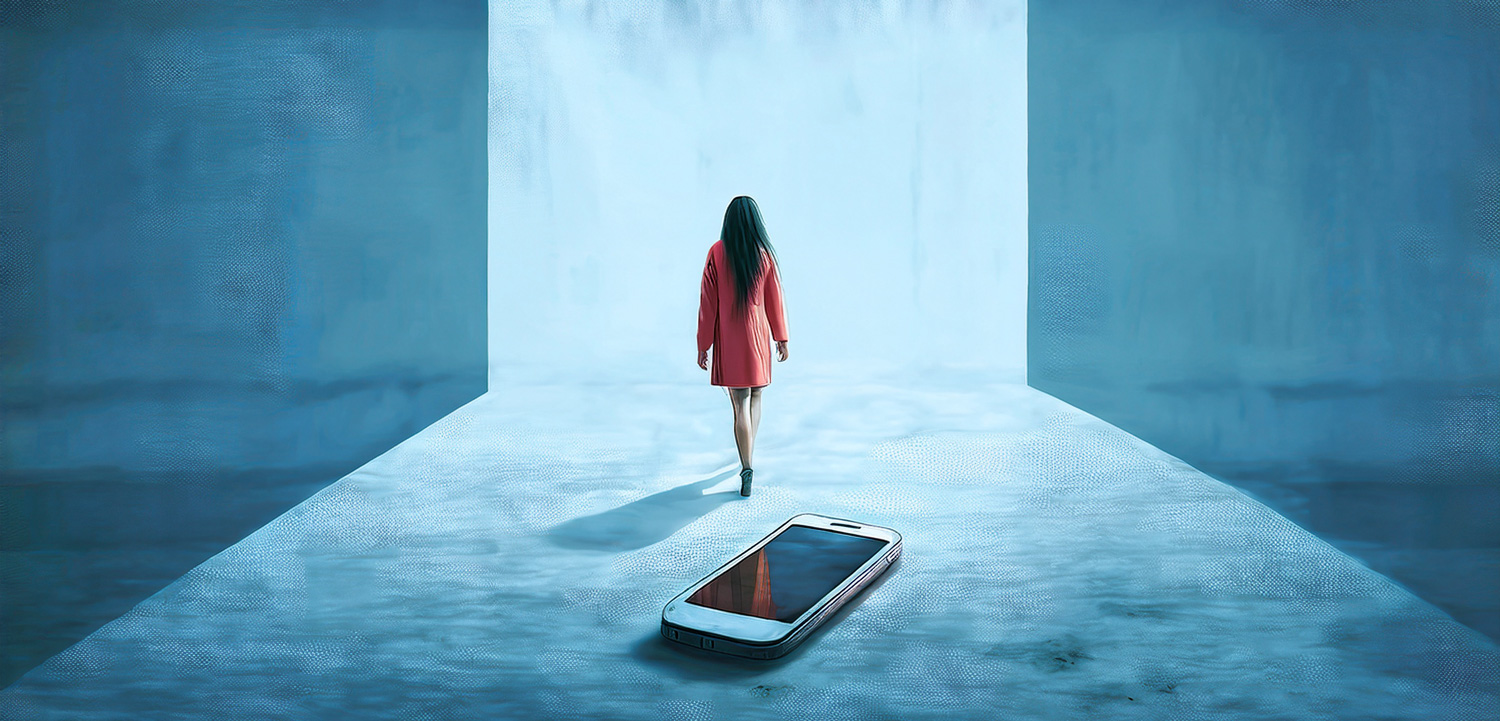
When I stopped reaching for my phone each morning, my days slowly came back into focus — quieter, clearer, and finally my own
—
The Reach
For years when I would open my eyes the first thing I would do was reach for my phone. For most people in the digital times we’re living in this is a normal reflex. Sleeping with the phone next to our heads, using it as an alarm clock, looking at the glow as we fall asleep and returning to the bright screen the moment we wake up.
News, notifications, and a hundred tabs filled my brain before I could even take a few breaths. I thought I was “just checking”, making sure everything and everyone was ok for the day. Making sure no one had left any negative comments or sent me a mean email. Scanning for threats as a way of thinking I was protecting myself.
What I was really doing was outsourcing my aliveness — letting the world and social media shape who I was before I had a chance to remember myself.
Eventually I began to feel fractured, my attention splintered in a million directions. My art, my writing, and my relationships started to feel pixelated, like there wasn’t a clear view of the life I was building — flattened by the constant hum of elsewhere.
The Fracture
As an artist and a writer my work depends on one thing : noticing. Noticing brings me to attention and attention brings me to devotion. Without building this skill and muscle my work falls flat. How the light lands on the windowsill, overhearing the accidental poem of a half sentence, the horses running in their perfect choreography on my morning walk. The more I reached for my phone, the more these moments disappeared.
What started as a desperate desire for connection eventually became a form of depletion. I began to hear whispers from others that I wasn’t alone in this feeling, that the background ache of fragmentation was afflicting most of us.
After years of taking social media breaks, sabbaticals and deactivating, I knew there was only one choice left: To permanently delete my account. To leave behind 80k followers, years of an archive, and social proof of concept. It wasn’t a moral decision, but one of survival. One of suffering from phone addiction and wanting to reclaim my attention and life. My nervous system was in a constant state of alarm — micro dopamine hits masking deep fatigue.
I had to ask myself a new question without the performance of social media: What is my attention for?
This question became the beginning of a new practice, a new way of looking at my life and my work.
The Turn
At first I expected quiet, silence, the discipline of deep listening. Instead what I found was a feeling of chaos. Looking in every other corner of my phone, without my endless scroll I was met with an emptiness that I wanted to fill with algorithmic addictive feeds. I wasn’t quite free yet. I didn’t know how to be with just myself — without an audience, a reason, or an update to give I had to look within for how I wanted to be communicating with my inner voice and outer work.
But slowly, something began to shift. The longer I stayed offline, the more I could hear the texture of my own thoughts again.
Presence, it turns out, is not passive. It’s active, muscular, and soft all at once. It asks us to stay with what is real — even when it’s ordinary, painful, or uncertain.
That’s where The Practice of Attention began — not as a concept, but as a lived experiment in re-inhabiting my own life.
The Practice
I believe we don’t need more discipline — we need more devotion. Attention is not a resource to manage; it’s a relationship to tend. Below are a few ways I’ve learned to return to it.
1. The Attention Audit
Once a week, I ask myself: Where did my energy go?
Not just my time — my aliveness.
I write it down: the conversations that fed me, the tabs that drained me, the moments I felt most awake. It’s not about judgment. It’s about noticing the pattern. Awareness itself begins to redirect energy toward what matters.
2. Micro-Rituals of Pause
Attention begins in the smallest pauses — before opening an app, before replying, before saying yes. I often do this by taking a flower essence, a few deep breaths, or closing my eyes and saying a small prayer.
No one will give us permission to slow down; we have to offer it to ourselves.
3. Analog Anchors
When I first started to leave my phone in another room, I realized how empty my hands felt. I needed a substitute for that restless gesture. For me, it became paper and textiles — notebooks, quilts, small hand-made lists, and books. The material world re-taught me steadiness and patience. Reading brought me back into my body and mind.
Your anchor might be a walk, a cup of tea, a brushstroke. Something that keeps you inside time instead of running ahead of it.
4. Relational Attention
Presence isn’t solitary. It deepens in community.
I’ve hosted writing groups, quilt camps, classes, and workshops — no performance, no algorithm. Being fully with one another became its own kind of practice both in person and in zoom rooms.
5. Creative Scaffolding
Attention is finite — structure protects it.
I build simple containers for my creative work: two hours each morning, without email, to write and to create a notebook to-do list I use after I reference my notes in Notion. These small systems let me sink into flow without constantly renegotiating boundaries.
The goal isn’t rigidity; it’s a structure that supports you.
The Return
Slowing down doesn’t mean doing less or being less tapped into the happenings of the world — it means doing what matters most, with the fullness of your being. When I began to practice attention in this way, I didn’t just get more done, I felt more alive inside what I was doing.
Now when I wake up my first thought is, how can I be a good neighbor, a good partner, a good friend to my companions and myself. This slowly replaced the habit of checking, the gloom of scrolling, and the restless urge to be anywhere but here.
We are living in times where our every move has the ability to be of service, and the world needs it swiftly. But I’d also argue it doesn’t need us to slip into urgency. It needs us to be more awake.
—
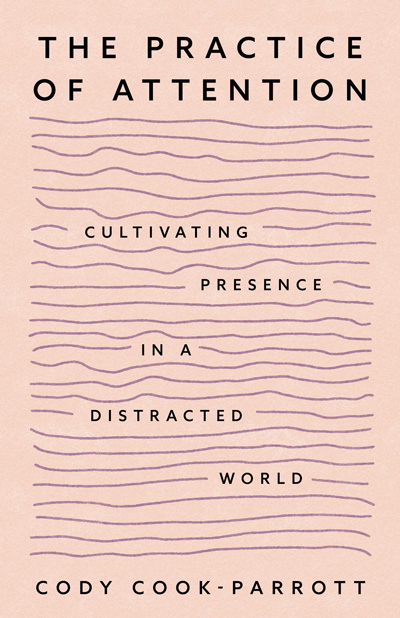
The Practice of Attention (St. Martin’s Press, March 2026) is my invitation to re-root your creative and personal life in presence — through simple experiments in noticing, slowness, and joy. It’s not about escaping the modern world, but learning how to live inside it with care. Our attention is not something we lost — it’s something we can choose to reclaim, again and again, one step at a time.
CLICK HERE for a special bonus when you pre-order the book.
You may also enjoy reading The Power of Off: Your Best Self In a Virtual World, by Nancy Colier.
